
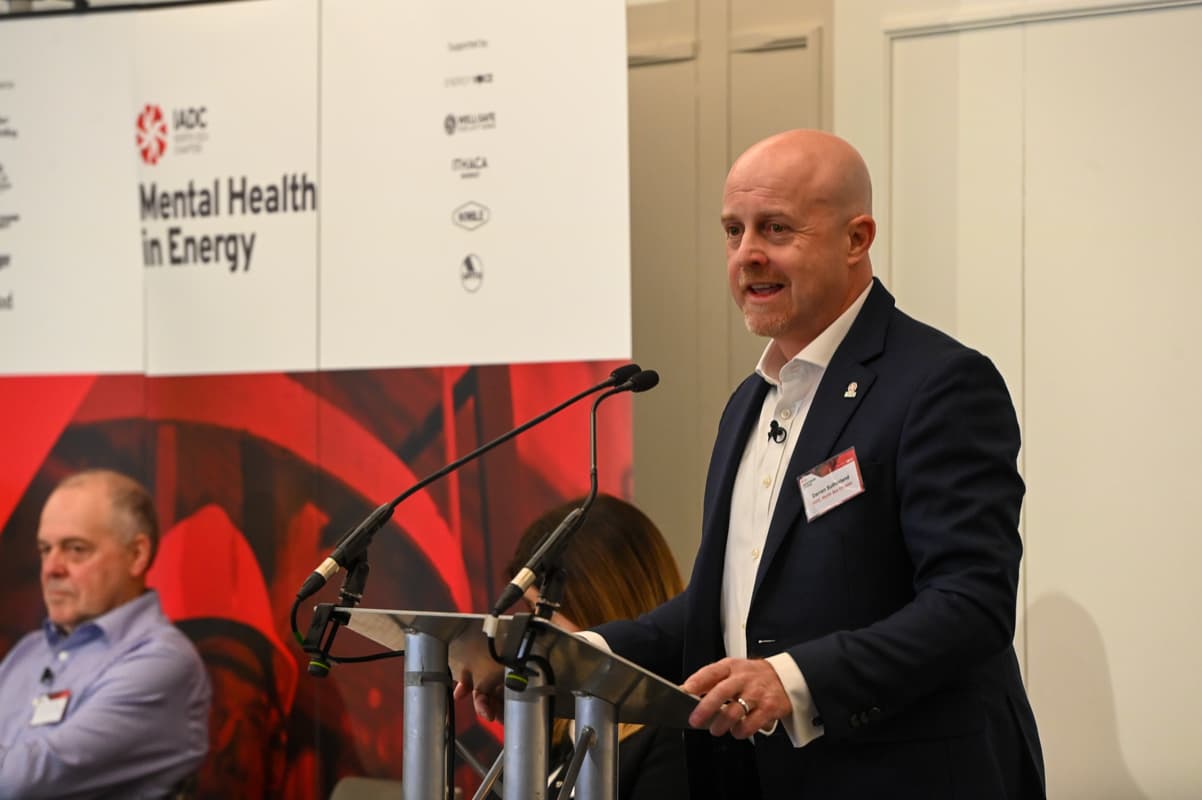
“The work we are doing is about coming together as human beings to allow us to do business better by creating improved working environments for our people, not at the expense of them.” Darren Sutherland, Chair of the International Association of Drilling Contractors (IADC)
A new mental health charter is being developed to help improve the working conditions for North Sea workers in the energy industry. It is titled ‘Changing minds: saving lives’ and can be read here: IADC Whitepaper V1.6 Mar1023.pdf
The charter acknowledges the significant mental health issues facing North Sea workers, and sets out to tackle them head on. Over 150 representatives of the industry teamed up to develop the charter after research revealed that many of the younger workers believe their employers do not take mental health as seriously as physical health. This research also showed that nearly a third of the workers were clinically depressed, and over a third of them struggle to sleep well. https://www.energyvoice.com/north-sea-mental-health/
The new IADC charter aims to ensure organisations go beyond minimum care provision, and it emphasises the importance of mental health care as a priority for the industry. The chair of IADC, Darren Sutherland, believes there is a desire for meaningful and lasting change. He hopes companies will show their support and sign the charter. Darren stated;
“The response has been phenomenal and to have so many stakeholders determined to play a part in improving the mental health support available to energy workers, both offshore and onshore, is heartening.”
The charter notes that the working conditions for offshore workers may have inadvertently contributed to the problem. Things such as the confined living and working spaces, the separation from family and community, and the rotational work patterns.
The charter was contributed to by operators, contractors, psychologists and third sector organisations. It aims to provide a framework to improve the mental health and safety of workers across the industry, detailing explicit actions, processes and improvements for all charter signatories to follow.
“Hopefully by Mental Health Awareness Week next year, we will have the majority of the North Sea companies, not only signed up to the charter, but abiding by its objectives.” Darren Sutherland.
You can find out more about the charter from the IADC website: https://www.iadc.org/drillbits/north-sea-chapters-hosts-mental-health-in-energy-workshop/
For more information see: https://www.shponline.co.uk/uncategorized/new-mental-health-charter-to-benefit-energy-industry-workers-after-almost-half-admitted-to-suicidal-thoughts/
If you or someone you know is struggling with mental health, you can call 116 123 and talk to Samaritans (https://www.samaritans.org/scotland/how-we-can-help/contact-samaritan/), or email jo@samaritans.org for a reply within 24 hours.
Recent Posts

OEUK Introduces 124kg Offshore Weight Limit for Safer Operations
Offshore Energies UK (OEUK) has announced a new safe clothed weight limit of 124kg for all offshore workers, effective November 2026. Learn what this means for offshore personnel, how the phased roll-out works, and how GRN Drilling supports candidate wellbeing and compliance.

UKCS Clothing Policy Winter Changes
This month you’ll be required to wear 3 layers under your survival kit when you are mobilising. There are some statements about what is required so we’ve put the information together for you so you are all set for your next trip.
So When is this required?
Between the 1st of October and the 31st of May, when you go offshore you must wear 3 layers of clothing under your survival kit. An example of this would be a long sleeve top, short sleeve top and a jumper.
Between the 1st of June and the 30th of September this is classed as summer and you only need 2 layers (e.g. a T-shirt and a jumper)
What is approved
Tops
• T-shirts
• Long Sleeve tops
• Jumpers (but not hoodies!)
• Jackets
Leg-wear
• Trousers
• Jeans
• Tracksuit Bottoms
Footwear
• Trainers
• Boots
• shoes
What is NOT Approved
Tops
• Hoodies
• Dresses
Leg-wear
• Skirts
• Shorts
Footwear
• Crocs
• Sandals/Flipflops
• High Heels
Common questions
Here are some common questions and the answers from Step Change in Safety.
Can I wear jeans?
Yes you can wear jeans to travel in.
Why is summer in June and not May?
We took the average sea temperatures of the UKCS over a number of years to decide when the water is warmer and when it is colder, therefore requiring more or less layers. We then used this information to decide that Summer is from 1st June – 30th September and Winter is 1st October – 31st May.
Why three layers in winter?
Studies have shown that the more layers you have on, the lower your risk of getting hypothermia when exposed to cold water.
During winter you must wear 3 layers, one of which must be a long-sleeved top. It is important to protect your core so more layers are required to cover your chest and internal organs.
Why no hoodies?
Hoodies, or any item of clothing with a hood, will interfere with the neck seal of the survival suit. It is essential that the seal around your neck and wrists is strong so that in the extremely unlikely event you are in the water there are no weaknesses in the seals to allow water into the suit.
Polo-necks and jackets with high collars also pose a risk to the neck seal.
Any other questions?
Remember, our team are here for you and we are always happy to answer any question you have big or small! You can also find more information at https://www.stepchangeinsafety.net/

GRN Kilt Walk 2024
We did it! A fantastic day on Sunday as the GRN team completed the 18 mile Kilt Walk to raise...